• Skip to main content
  • Skip to primary sidebar
  • Skip to footer
Peak Performance Fitness

Lynbrook | New Hyde Park | NY

  • Home
  • Why Peak Fitness
    • About Us
    • Meet Our Team
    • Our Facilities
    • Testimonials
  • Our Programs
    • Weight Loss Program
    • Personal Training
    • Sports Specific Training
    • VO2 / RMR Analysis
    • InBody Body Composition Analysis
    • ACL Rehabilitation
    • Classes / TRX Training
    • Golf Fitness & Performance Program
    • Insurance Reimbursement
  • Free Trial
  • Contact
  • Blog
  • Gift Certificates
  • Physical Therapy Center
  • Home
  • Why Peak Fitness
    • About Us
    • Meet Our Team
    • Our Facilities
    • Testimonials
  • Our Programs
    • Weight Loss Program
    • Personal Training
    • Sports Specific Training
    • VO2 / RMR Analysis
    • InBody Body Composition Analysis
    • ACL Rehabilitation
    • Classes / TRX Training
    • Golf Fitness & Performance Program
    • Insurance Reimbursement
  • Free Trial
  • Contact
  • Blog
  • Gift Certificates
  • Physical Therapy Center

Blog

Strength Training for “Weight Loss”

October 11, 2016

Most people look to the scale in order to assess their fitness or see results from exercise. However, body weight is NOT an accurate measure of physical fitness. The number on the scale does not necessarily relate to your exercise performance. “Weight loss” is in quotations because it is possible for you to achieve your appearance and performance goals without significantly changing the numbers on the scale.

With that being said, body composition measurements, lean body mass (muscle) and body fat percentage, are better
indicators of one’s progress. Decreasing the percentage of body fat should be the main focus, as opposed to overall weight loss; and strength training has been proven to be more effective for altering body composition than ‘cardio’ (aerobic exercise).

Here’s why…

  • Muscle tissue plays a major role in our metabolism; the more muscle tissue we have, the more calories (and fat!) we can burn.
  • Strength training, when done correctly, increases our lean body mass (amount of muscle tissue) while simultaneously decreasing our body fat percentage.
  • Along with the benefits during a workout, strength training also has the ability to keep your metabolism elevated after a workout. Therefore allowing you to continue to burn fat while you aren’t exercising.
  • Comparatively, during aerobic exercise (long distance running/walking, cycling, etc.) we burn through our fat stores and muscle tissue, as well as losing water weight from sweat. So although we are “losing weight” from cardio, we are also sacrificing muscle tissue.
    • Also, aerobic exercise does not show the same post-exercise effects on metabolism as strength training.
  • Strength training increases the activity and effectiveness of hormones that control our metabolism and body composition.

Strength Training

  • Train the whole body about 3x a week, with rest days in between
  • Beginner lifters should select weights that they can lift for 2-3 sets of 12-15 reps. More experienced lifters can try heavier weights for 3 sets of 6-8 reps
  • Only rest for about 1 minute or less between sets; try to alternate sets of lower-body and upper-body exercises in order to keep the intensity of the workout high while allowing parts of our body to recover.
  • Periodically increase the weights and variety of your exercises so that your muscles are constantly being challenged.


Points to Remember

  • Because we are increasing our muscle tissue, strength training may initially result in weight gain. However, though the number on the scale is increasing, our body fat percentage will decrease and physical fitness will improve.
  • Cardio is still important for improving ones fitness, cardiovascular and respiratory health and should be
    included in weekly exercise schedules. It is just not as effective for altering body composition as strength training.
  • Diet must be monitored– Keep in mind that nutrition goes hand-in-hand with weight loss and changes in body composition. In regards to strength training, it is important to consume a sufficient amount of protein daily in order to build and recover muscle tissue.
  • Rest days- We must give our muscles time to recover from exercise to prevent prolonged muscle soreness, decrease the chance of injury, and ensure the effectiveness of our next workout.


By David McCalla

Filed Under: News Tagged With: Exercise, strength training, weight loss

Recipe of the Week: Apple Butternut Squash Soup

October 5, 2016

Servings: 6

Ingredients:

  • 1 butternut squash, cubed (I used about 4 cups cubed)
  • 1 large sweet onion, chopped
  • 2 tbsp olive oil
  • 4 apples, peeled and quartered
  • 4 cups of vegetable stock
  • 1 cup of rice drink
  • ¼ cup of coconut milk
  • ½ tsp ground nutmeg
  • Sea salt


Directions:

  1. In large pot, sauté onion until soft, about 5 minutes. Add squash, apples, stock, rice milk, coconut milk, and nutmeg. Cover, bring to boil, and then simmer for about 30 minutes until squash is soft.
  2. Using immersion blender, puree soup. Add sea salt to taste.


Nutrition:

  • Calories 211
  • Carbohydrates 39g
  • Fat 8g
  • Protein 3g
  • Great source of Vitamin A and Potassium


Filed Under: News, Recipes

Understanding the Fat Burning Zone v. High Intensity Exercise

October 5, 2016

The fat burning zone is often referenced, and yes it does exist, but most people don’t understand exactly what this means. This concept is that more fat is burned at a lower intensity of training, roughly 60-70% of your max heart rate vs. a higher intensity of training. This is based off of percentages. If you are training at a lower intensity, burning 50% of calories from fat and at a higher intensity burning 35% of fat, part of the puzzle is missing. This piece shows that at a higher intensity, you burn more calories overall.

High intensity training is not always appropriate for everyone for various reasons. Maybe they are new to exercise, recovering from injuries, previous health conditions, etc. For those people able to incorporate high intensity exercise, interval training is a great way to start. Having both low intensity and high intensity exercises in your exercise program is beneficial for your body. Interval training is when you alternate between at least two activities, changing different rates of speed, degree of effort, etc. Each person has a different level which they are able work at. Finding the target heart rate is a good way to monitor the level of effort.

Beginner: This level would appropriate be anyone new to exercise or recovering from injuries. Starting with lower intensity exercise (roughly 60% heart rate) is a good way to ease your body into a routine. Incorporate higher intensity exercise very little the first 2 weeks. At this level, the higher intensity might only be 70-75% of your heart rate. The intervals will change over time, but an example would be to start with 4 min low intensity, 1 min high intensity and repeat 2-4 times.

Intermediate: This level would be for anyone who has been exercising for a while and ready to step up their program. This interval program would start with a lower intensity (roughly 60% heart rate) and a higher intensity of 80%. Maintain the lower intensity for 2 min and the higher for 1 min. This can be repeated 5 to 10 times.

Advanced: This level would be more for athletes. The interval program would start at lower intensity of 70% and a higher intensity of 90-100% of heart rate max. Maintain 1 min low intensity and 1 min high intensity. This can be repeated 10-15 times. Depending on the type of athlete these ratios will change.

Each person has their own limits and should listen to their body. These are guidelines to interval training, but not the only way to do it. The exercise physiologists at Peak Performance would be happy to set you up with a program right for you.


By Corynne Pereira

Filed Under: News Tagged With: Exercise, fat burning, HIIT, weight loss, Workout

Recipe of the Week: Egg White Vegetable Muffins

September 30, 2016

Prep Time: 5 minutes
Cook Time: 30 minutes
Servings: 12

Ingredients:

  • Coconut oil spray
  • 24 Egg whites
  • 1/2 Red bell pepper (finely diced)
  • 1/2 yellow bell pepper (finely diced)
  • 2 cups Fresh spinach
  • 3 Green onions (for topping)
  •  Salt and pepper (to taste)
  • Or try any combination of your favorite vegetables!

Instructions:

  1. Preheat the oven to 350 degrees F.
  2. Spray a muffin tin with coconut oil spray.
  3. Whisk the egg whites together with the salt and pepper in a large bowl.
  4. Stir in the bell peppers and spinach.
  5. Carefully spoon the egg and vegetable mixture into the muffin cups, dividing the mixture equally between the twelve cups.
  6. Bake for 25-30 minutes or until the egg whites are set.
  7. Remove from the oven and let cool for 5 minutes before serving.
  8. Serve warm and topped with green onions. Alternatively, store in the refrigerator.


Original recipe can be found here!


Filed Under: News, Recipes Tagged With: breakfast, eggs, muffin, recipe, weight loss

What is the 80/20 Rule for Nutrition?

September 27, 2016

Often times we tend to struggle sticking to a meal plan or being consistent with our eating. This can be attributed to an abundance of things such as: boredom, lack of discipline, scheduling, etc. A meal plan should be simple and not require you to torture yourself on a day-to-day basis. Yes, eating “clean” may require giving up some of your favorite treats- it requires diligence. However, it should also be something that you learn how to enjoy and fit into your everyday life. This is where the 80/20 rule comes into play.

The 80/20 rule goes under the premise that if you are eating clean and healthy 80% of the time, then it is okay to be not so good or indulge a little the other 20% of the time. The 80% should include whole foods, vegetables, lean protein, and avoiding processed food. Now, this can be easily misconstrued; what the 20% really means is that it should be consumed once per week and not allocating 20% of each day to unhealthy foods. If you have about 21 meals each week (breakfast, lunch, dinner), maybe 3-4 meals are less healthy. Think of this as a more indulgent home cooked meal and not binging on fast food. This “20%” can also be called your “cheat meal.” Sometimes a well timed cheat meal can help you stay on track mentally.

A well timed cheat meal may balance the hunger hormones levels in your body, both of which are correlated with an increase in metabolism and aid in weight loss. One of these hormones, leptin is released into the body as you eat and leaves you with a satiated feeling. When leptin levels are low, ghrelin, the appetite hormone, levels are high. After you eat, ghrelin levels will drop as your digest, helping you feel satisfied. Another benefit of having a cheat meal may be that it gives you something to look forward to.

A meal plan is easy to stick to if you know that Saturday night you can indulge a bit for dinner. If you’re looking for a plan that you can stick to long term or trying to incorporate healthier eating, give the 80/20 rule a shot!


By Tyler Palmquist

Filed Under: News Tagged With: Diet, Nutrition, weight loss

Fad Diets v. Lifestyle Change

September 20, 2016

A “fad diet” is a weight loss plan that may over-promises results. These types of diets don’t result in long-term weight loss and are usually not very healthy. You may have heard of some of them or tried one; think of a liquid diet or controlled/limited carbohydrates.

Often times, people are willing to try anything that promises to help them lose weight- especially if it promises to be quick and easy. The main reason for these diets being that everyone wants to look or feel better; or maybe they are worried about developing weight-related diseases. Diets like these are appealing because of their quick fix instead of making the effort to lose weight through long-term changes in their eating and exercise habits.

Your lifestyle is composed of what you eat, how you manage your stress, how often you exercise and more. Lifestyle changes require you to alter these behaviors; whether it is restricting fast food or trying to get 10,000 steps a day. The key is that these habits are maintained as opposed to be a short term fix.

It is important to remember that healthy weight loss is 1-2 pounds per week. Fad diets often promise rapid results which may lead to unhealthy weight loss. Remember, it took time to gain that unwanted weight and it will take time to lose it. Limiting food choices without encouraging a balanced diet is not a healthy way to create lasting changes.

Here are a few simple tips for creating those changes:

  • Don’t skip meals- this includes breakfast!
  • Limit liquid calories- avoid sugary sodas, alcohol, and juices (swap for whole fruits instead)
  • Exercise on a regular basis- the best kind of exercise is exercise that you’ll continue, so choose an activity that you enjoy J
  • Increase daily physical activity- park farther away, take the stairs when you can, work up to taking 10,000 steps per day


By Louise Mills-Strasser

Filed Under: News Tagged With: Diet, lifestyle change, weight loss

Recipe of the Week: Apple Pie Granola Bars

September 15, 2016

Makes: 20 bars
Prep time: 25 minutes
Cook time: 10 minutes
Per bar: 155 cal, 8 g fat, 19 g carbs, 5 g sugar, 3 g protein

Ingredients:

2 cups rolled oats
1/2 cup shredded, unsweetened coconut
1/2 cup pecans, chopped
1/3 cup dates
1/4 cup coconut oil
1 teaspoon vanilla
1/3 cup honey
1 tablespoon cinnamon
1/2 teaspoon nutmeg
1 cup dried apples, chopped

Directions:

  1. Preheat the oven to 350°F.
  2. Place the oats in a blender or food processor and pulse for 5 to 10 seconds.
  3. On a baking sheet, combine the oats, shredded coconut and pecans and toast in the oven for approximately 10 minutes, stirring after 5 minutes to ensure mixture does not burn. Once golden in color, remove from the oven.
  4. Place the dates in a food processor and blend until they fully combine and form a paste-like consistency.
  5. In a sauce pan over medium heat, combine the coconut oil, honey and vanilla. As the liquid heats up, begin to stir the date paste until it becomes well-combined with the mixture.
  6. In a bowl, combine the toasted oat mixture, chopped apples, cinnamon, nutmeg and hot liquid from the stove. Stir until completely mixed.
  7. Firmly press the mixture into a baking tray lined with parchment paper. Cover with plastic wrap and refrigerate for at least two hours or until bars become firm.
  8. Remove from the fridge and cut into 20 bars. Store in an airtight container at room temperature for more crumbly bars, or in the fridge for firmer bars.


You can find the original recipe here.

Filed Under: News, Recipes Tagged With: apples, fall, granola, recipe

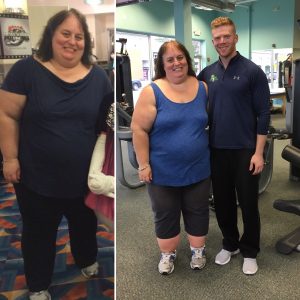
Member Spotlight: Deanna’s Weight Loss Journey

September 14, 2016

We love to highlight the success of our members! Here is the story of one client who has been working extra hard this year. Read about her accomplishments and check out her story.

My journey with Louise began a year ago when I realized I had gained 20 lbs while recovering from surgery. I made a life style change with my eating habits and started exercising. Thanks to the awesome, hard working Louise and eating healthier I am down 30 pounds. I have more pounds to lose but I know I can do it with her support.

My journey isn’t over, it is just beginning!

-Deanna S.

Filed Under: News Tagged With: member spotlight, members, weight loss

  • « Go to Previous Page
  • Page 1
  • Interim pages omitted …
  • Page 63
  • Page 64
  • Page 65
  • Page 66
  • Page 67
  • Interim pages omitted …
  • Page 84
  • Go to Next Page »

Primary Sidebar

Recent Posts

  • RECIPE OF THE WEEK: FIRECRACKER SALMON WITH PEACH AVOCADO SALSA
  • RECIPE OF THE WEEK: GRILLED STEAK KEBABS
  • RECIPE OF THE WEEK: WATERMELON PIZZA
  • RECIPE OF THE WEEK: TURKEY QUINOA CHILI
  • RECIPE OF THE WEEK: LEMONY PARSELY BAKED COD

Categories

  • News
  • Recipes

Get Started: (516) 548-7443 | fitness@peakptfitness.com

Footer

Peak Performance Fitness

  • Home
  • Why Peak Fitness
  • Programs
  • Free Trial
  • Contact
  • Blog
  • Gift Certificates
  • Physical Therapy Center

Our Programs

  • Weight Loss Program
  • Personal Training
  • Sports Specific Training
  • VO2 / RMR Analysis
  • Classes / TRX Training
  • ACL Rehabilitation Program
  • Insurance Reimbursement

225 Merrick Road
Lynbrook, NY 11563
USA

T +1 (516) 548-7443
T +1 (516) 599-8734
F +1 (516) 887-0803
E fitness@peakptfitness.com

Mailing List Signup

Join our mailing list to stay up to date on the latest news, events and exclusive offers!

Join Us Online

  • Facebook
  • Instagram
  • Twitter

Peak Performance Fitness | Visit the Peak Physical Therapy Center
Lynbrook: 225 Merrick Road, Lynbrook, NY 11563
Copyright © 2026 Peak Performance Fitness