• Skip to main content
  • Skip to primary sidebar
  • Skip to footer
Peak Performance Fitness

Lynbrook | New Hyde Park | NY

  • Home
  • Why Peak Fitness
    • About Us
    • Meet Our Team
    • Our Facilities
    • Testimonials
  • Our Programs
    • Weight Loss Program
    • Personal Training
    • Sports Specific Training
    • VO2 / RMR Analysis
    • InBody Body Composition Analysis
    • ACL Rehabilitation
    • Classes / TRX Training
    • Insurance Reimbursement
  • Free Trial
  • Contact
  • Blog
  • Gift Certificates
  • Physical Therapy Center
  • Home
  • Why Peak Fitness
    • About Us
    • Meet Our Team
    • Our Facilities
    • Testimonials
  • Our Programs
    • Weight Loss Program
    • Personal Training
    • Sports Specific Training
    • VO2 / RMR Analysis
    • InBody Body Composition Analysis
    • ACL Rehabilitation
    • Classes / TRX Training
    • Insurance Reimbursement
  • Free Trial
  • Contact
  • Blog
  • Gift Certificates
  • Physical Therapy Center

health

Signs, Symptoms, and Exercise Considerations for Stroke Victims

June 19, 2018

Although exercise has many benefits, a high amount of stress on the body can trigger negative events that one should look out for.  It is of vital importance to understand the signs and symptoms of cardiac events, such as the occurrence of a stroke.  Strokes occur when a blood vessel that is connected to the brain becomes extremely blocked from plaque build-up, causing a lack of oxygenated, nutrient-filled blood being delivered to the brain.

Stroke is the fourth leading cause of death in America today and can also cause long term changes leading to disability or lack of mobility/neuro-motor functioning.  This type of cardiac event can happen at any age but generally affects those ages 55 and older, and as we age our risk of having a stroke become greater.  Of all populations men, African Americans, and people with diabetes or heart disease are at the highest risk.

Some of the warning signs of having a stroke include sudden weakness of the face, arms or legs (especially on one side), sudden confusion or inability to speak, lack of vision, dizziness or coordination problems, and a sudden, severe headache.  If you have any of these signs, stop exercise immediately and get to the hospital or call 9-1-1.

The major goal of exercise after a stroke should be to improve the overall quality of life for the victim.  In addition to improving measures of quality of life, other measures such as functional capacity and mobility (i.e. increasing gait velocity), neurological impairment, and motor function (i.e. lowering the energy cost of a hemiparetic gait), will also benefit from regular exercise. The three major rehabilitation goals for the stroke patient are preventing complications of prolonged inactivity, decreasing recurrent stroke and cardiovascular events, and increasing aerobic fitness.

Before beginning an exercise program, the two most important things to consider are if the benefit outweighs the risk, as well as, the severity of the stroke.  A stroke victim should be evaluated by a medical professional before initiating a program—performing strength and aerobic training can lead to serious musculoskeletal injury.

To prevent muscle deterioration from prolonged inactivity, performing exercises that mimic movements of everyday life activities (i.e. standing from a seated position, squatting down, walking, reaching overhead) should performed regularly.  Moreover, moving the entire body throughout its full range of motion should also be considered.  In terms of aerobic fitness, stroke patients have been shown to achieve significantly lower maximal workloads and heart rate and blood pressure responses than control subjects during progressive exercise testing to volitional fatigue.

Setting reasonable goals to return to pre-stroke fitness levels as opposed to above baseline levels should be aimed for.  Exercising will be significantly harder post-stroke, but is of vital importance for the individual in order to improve their quality of life.


By Anthony Locast


Sources
Gordon, Neil F., et al. “Physical Activity and Exercise Recommendations for Stroke Survivors.”Circulation, American Heart Association, Inc., 27 Apr. 2004, circ.ahajournals.org/content/109/16/2031.

Filed Under: News Tagged With: Diet, Exercise, Fitness, goals, health, healthy, physiologists, special populations, Spine, sports performance, strength training, stretching, success, tips, warmup, Workout

Recipe of the Week: BALSAMIC CHICKEN AND ROASTED VEGETABLES

June 14, 2018

Prep Time: 15 minutes
Cook Time: 1 hour
Total Time: 1 hour 15 minutes
Servings: 6

Ingredients:

  • 6 chicken thighs skin on, bone in
  • 24 oz baby gold potatoes halved
  • 1 large red onion
  • 1 tbsp fresh rosemary chopped
  • 2 sprigs fresh thyme, remove the leaves
  • 1/2 tsp pepper
  • 1/2 tsp salt
  • 5 cup cherry tomatoes

Marinade

  • 3/4 cup balsamic vinegar
  • 2 tbsp olive oil
  • 1 clove garlic crushed
  • 2 tbsp dijon mustard

Instructions:

  1. Turn on your oven to 400° F
  2. Mix the marinade together and add the chicken, toss it around to coat it and put it in the fridge.
  3. Get out a half sheet pan. You can line it with parchment for easy clean up.
  4. Toss the halved potatoes and onions in a small amount of olive oil, and then place the potatoes only on the sheet pan and bake for 15 minutes. Put the onions to one side.
  5. After 15 minutes, remove the sheet pan and add the red onion and the chicken along with the marinade, then sprinkle on the chopped rosemary and thyme and a little salt and pepper, and put it back in the oven.
  6. Cook for a further 25 minutes, then take out the pan again to add the cherry tomatoes, and cook for 20 minutes more.
  7. After 45 minutes the chicken thighs should be fully cooked to an internal temperature of 165°F
  8. Plate and enjoy!

Note: You can use skinless boneless thighs, or skin on boneless variety too. The skinless boneless thighs will not take as long to cook as the bone in versions so you will need to adjust the cook time to compensate for that.

Nutrition:

Calories: 394 cal
Total Fat: 23g
Total Carbs: 22g
Sugars: 5g
Protein: 22g

Balsamic Chicken with Potatoes, Red Onion and Tomatoes

Filed Under: News, Recipes Tagged With: chicken, Diet, Exercise, Fitness, fruit, goals, health, healthy, Hydration, motivation, recipe, salad, sports performance, success, summer, tips, vegetables, weight loss, Workout

Recipe of the Week: Hawaiian Turkey Sliders

May 25, 2018

Serves: 6
Total Time: 30 minutes
Active Prep: 30 minutes

Ingredients

  • 1 pound 93%-lean ground turkey
  • 2 tablespoons reduced-sodium teriyaki sauce
  • 2 scallions, sliced
  • 1 large garlic, minced
  • ¼-inch-thick fresh pineapple rings
  • 1 small red onion, cut into ¼-inch-thick rings
  • toasted slider buns, preferably whole-wheat
  • 2 tablespoons mayonnaise
  • 6 small leaves Boston lettuce

Preparation

  1. Preheat grill to medium-high.
  2. Combine turkey, teriyaki sauce, scallions and garlic in a medium bowl; gently knead together. Do not over mix. Form into 6 burgers, about 3 inches wide.
  3. Oil the grill rack. Grill the burgers until an instant-read thermometer inserted in the center registers 165°F, 2 to 3 minutes per side. Grill pineapple rings until lightly charred, about 2 minutes per side. Grill onions until lightly charred and starting to soften, about 2 minutes per side.
  4. Assemble the burgers on toasted buns with 1 teaspoon mayonnaise, 1 lettuce leaf, 1 pineapple ring and about 3 onion rings each.


Original recipe from Eating Well can be found here!


Filed Under: News, Recipes Tagged With: Diet, Exercise, Fitness, goals, health, healthy, holidays, motivation, Nutrition, recipe, salad, success, summer, vegetables, weight loss

Exercise and Osteoporosis

May 22, 2018

Osteoporosis is a bone disease that develops when the body loses too much bone mass, makes too little bone, or both. As a result, bones become weak and worst case, may break as a result of a fall. Peak bone mass is determined by sex, heredity family history, race, diet and exercise and about 60% of bone growth occurs during adolescence. Moderate exercise protects against osteoporosis, but too little exercise may cause osteoporosis. Inactivity may also cause bone loss, whereas weight-bearing exercises may maintain or help improve bone mineral density. There is a significant correlation between muscle strength and bone mineral density. Weight-bearing exercises have been proven to increase bone mineral density over time. These exercises include activities that make you move against gravity while staying upright. Weight-bearing exercises can be high-impact or low-impact.

High-impact weight-bearing exercises help build bones and keep them strong. If you have broken a bone due to osteoporosis or are at risk of breaking a bone, you may need to avoid high-impact exercises. Examples of high-impact weight-bearing exercises are:

  • Dancing
  • Jogging/running
  • Jumping Rope
  • Stair climbing
  • Tennis

Low-impact weight-bearing exercises can also help keep bones strong and are a safe alternative if you cannot do high-impact exercises. Examples of low-impact weight-bearing exercises are:

  • Using elliptical training machines
  • Walking (on a treadmill or outside)
  • Low impact aerobics class

Strength Training Exercises

These activities include moving your own body, weights or other resistance against gravity. Examples include:

  • Lifting weights
  • Using elastic exercise bands
  • Using weight machines
  • Lifting your own body weight

Balance Exercises

These improve your ability to hold yourself upright and help prevent falls. Examples include tai chi, yoga, and supervised stability exercises.

Remember to always check with your doctor before implementing an exercise routine.


By Louise Mills-Strasser, M.S., EP-c

Filed Under: News Tagged With: Exercise, fall, Fitness, goals, health, healthy, members, Nutrition, physiologists, running, sports performance, strength training, stretching, success, tips, warmup, weight loss, Workout

Recipe of the Week: Spiced Chicken with Grilled Peach Salsa

May 11, 2018

Serves: 4
Serving size: 1 chicken breast and 1/2 cup salsa

Ingredients:

  • 1 1/2 teaspoons cumin seeds
  • 1 1/2 teaspoons fennel seeds
  • 1 1/2 teaspoons coriander seeds
  • 1 1/2 teaspoons grated lime rind
  • 1/4 cup fresh lime juice, divided
  • 4 teaspoons honey, divided
  • 3/4 teaspoon kosher salt, divided
  • 1/2 teaspoon freshly ground black pepper, divided
  • 4 (6-ounce) skinless, boneless chicken breast halves
  • Cooking spray
  • 3 peaches, pitted and quartered
  • 1/2 cup chopped fresh cilantro
  • 1 tablespoon extra-virgin olive oil
  • 2 large purple scallions or spring onions, thinly sliced
  • Lime wedges (optional)

Directions:

  1. Place first 3 ingredients in a small skillet over medium heat; toast, shaking the pan occasionally, for 2 minutes or until fragrant. Remove from heat; coarsely grind spices using a mortar and pestle or spice grinder.
  2. Combine 2 teaspoons spice mixture, lime rind, 2 tablespoons juice, 2 teaspoons honey, 1/2 teaspoon salt, and 1/4 teaspoon pepper in a large bowl. Add chicken; toss to coat. Let stand 10 minutes.
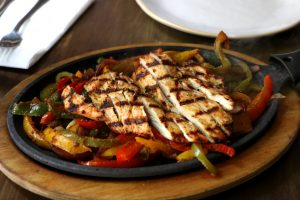
  3. Heat a grill pan over medium-high heat. Coat pan with cooking spray. Add chicken; cook 12 minutes or until a thermometer registers 155°, turning once. Transfer chicken to a plate; let stand 5 minutes. Thinly slice each chicken breast across the grain.
  4. Recoat pan with cooking spray. Add peaches; grill 3 minutes, turning once to mark the cut sides. Transfer peaches to a cutting board; coarsely chop. Transfer peaches and their juices to a large bowl. Add remaining 1 teaspoon spice mixture, remaining 2 tablespoons lime juice, remaining 2 teaspoons honey, remaining 1/4 teaspoon salt, remaining 1/4 teaspoon pepper, cilantro, olive oil, and scallions. Serve chicken with salsa and lime wedges, if desired.

Nutritional Information

Per serving:

Calories 299
Fat 8.1 g; Protein 36 g; Carbohydrate 22 g; Fiber 3 g


Filed Under: News, Recipes Tagged With: chicken, Diet, Exercise, Fitness, fruit, goals, health, healthy, Nutrition, physiologists, recipe, success, summer, vegetables, weight loss, Workout

What Does It Mean to Be Actively Inactive?

May 8, 2018

What does it mean to be actively inactive? Sounds like silly concept, but the fact of the matter is, there are a lot of people who are actively inactive. This concept is based off people that might come to the gym for a half hour or hour and work hard and then go home or to work and be very sedentary.

When you work so hard at the gym, you really want to take advantage of that hard work and continue in everyday life being more active.

Some things you can incorporate into your everyday lives are pretty simple:

  • Achieve that 10,000 step goal per day.
  •             +you can do this by parking a little further away
  •             +taking stairs rather then elevator or escalator
  •             +setting a timer at your desk so you get up every hour
  • Changing your lifestyle to more active down time activates like hiking and gardening. This is the perfect time of year to go outside!

There are 168 hours in a week and if you spend only 1 or 2 hours during the whole week exercising and the rest not very active then your still left with 166-167 hours per week you’re missing out on physical activity. We obviously have to take into account sleep and important rest time, but when you decide to change your lifestyle is when exercise and eating right all fall into place and you see the best results!


By Corynne Duprey

Filed Under: News Tagged With: Athlete, Diet, Exercise, Fitness, health, healthy, motivation, Nutrition, physiologists, running, Sports, sports performance, tips, weight loss, Workout

Recipe: Garden Vegetable Frittata

May 4, 2018

Total: 45 min
Prep: 20 min
Cook: 25 min
Yield: 6 servings

Ingredients:

  • 2 tablespoons olive oil, plus more for drizzling
  • 5 small red potatoes, thinly sliced
  • 1 bunch green onions, trimmed and sliced
  • 1 cup grape tomatoes, sliced
  • 1 cup baby spinach, torn
  • 1 clove garlic, crushed
  • 8 eggs
  • 1 tablespoon chopped fresh basil, plus more for garnish
  • 1 cup shredded Asiago cheese, plus more for garnish
  • Kosher salt and freshly ground black pepper

Directions:

  1. Preheat the oven to 375 degrees F.
  2. Heat 1 tablespoon olive oil in a large skillet over medium heat. Add the sliced potatoes to the skillet, saute for about 6 to 8 minutes, until tender but firm. Remove the potatoes from the skillet. Add another tablespoon olive oil, and add the green onions, tomatoes, spinach, and garlic. Saute for an additional 1 to 2 minutes or just until the spinach is wilted. Season the vegetables with salt, and pepper.
  3. In a medium bowl, beat together the eggs, basil, cheese, salt, and pepper. Pour into the skillet over the vegetables. Reduce heat to medium-low and scramble the eggs for 1 minute. Return the potatoes to the skillet. Cook for an additional 2 to 3 minutes, or just until the eggs start to set around the edges. Drizzle olive oil around the edge of the pan to ensure easy removal.
  4. Finish cooking in the oven for an additional 10 to 12 minutes, until the eggs have completely set in the center. Serve straight out of the skillet, or flip onto a serving plate. Garnish with shredded Asiago cheese and fresh basil.


Original recipe from the Cooking Channel can be found here!


Filed Under: News, Recipes Tagged With: breakfast, Diet, eggs, Exercise, goals, health, healthy, motivation, Nutrition, spinach, spring, strength, strength training, success, tips, vegetables, weight loss, Workout, zucchini

Recipe of the Week: Spinach Harvati Pizza

April 26, 2018

Prep Time: 8 minutes

Cook Time: 5 minutes

 Ingredients:

  • 6 Whole Wheat Pita Bread Pockets
  • 1 10oz box of Frozen Spinach, prepared
  • 1 Medium Red Pepper, sliced
  • 4oz package of Havarti Cheese with Dill, grated (you can find at Trader Joes)

 Directions:

  1. Preheat oven to 400*.
  2. Place pitas on sprayed baking sheet. Top with spinach, cheese, and peppers.
  3. Heat until cheese is bubbly, about 5-7 minutes.

Nutrition:

Serving size: 1 Pita

Calories: 290, Carbohydrates: 47g, Fat: 8g, Protein: 14g, Sugar: 1g


Filed Under: News, Recipes Tagged With: Diet, Exercise, Fitness, goals, health, healthy, motivation, Nutrition, success, tips, vegetables, weight loss

  • « Go to Previous Page
  • Page 1
  • Interim pages omitted …
  • Page 33
  • Page 34
  • Page 35
  • Page 36
  • Page 37
  • Interim pages omitted …
  • Page 50
  • Go to Next Page »

Primary Sidebar

Recent Posts

  • RECIPE OF THE WEEK: HIGH-PROTEIN PEANUT BUTTER BANANA OVERNIGHT OATS
  • RECIPE OF THE WEEK: HIGH-PROTEIN M&M CHRISTMAS COOKIES
  • RECIPE OF THE WEEK: BUFFALO SHRIMP LETTUCE WRAPS
  • RECIPE OF THE WEEK: CROCKPOT CREAMY CASHEW CHICKEN
  • RECIPE OF THE WEEK: HERB-ROASTED TURKEY

Categories

  • News
  • Recipes

Get Started: (516) 548-7443 | fitness@peakptfitness.com

Footer

Peak Performance Fitness

  • Home
  • Why Peak Fitness
  • Programs
  • Free Trial
  • Contact
  • Blog
  • Gift Certificates
  • Physical Therapy Center

Our Programs

  • Weight Loss Program
  • Personal Training
  • Sports Specific Training
  • VO2 / RMR Analysis
  • Classes / TRX Training
  • ACL Rehabilitation Program
  • Insurance Reimbursement

225 Merrick Road
Lynbrook, NY 11563
USA

T +1 (516) 548-7443
T +1 (516) 599-8734
F +1 (516) 887-0803
E fitness@peakptfitness.com

Mailing List Signup

Join our mailing list to stay up to date on the latest news, events and exclusive offers!

Join Us Online

  • Facebook
  • Instagram
  • Twitter

Peak Performance Fitness | Visit the Peak Physical Therapy Center
Lynbrook: 225 Merrick Road, Lynbrook, NY 11563
Copyright © 2026 Peak Performance Fitness