• Skip to main content
  • Skip to primary sidebar
  • Skip to footer
Peak Performance Fitness

Lynbrook | New Hyde Park | NY

  • Home
  • Why Peak Fitness
    • About Us
    • Meet Our Team
    • Our Facilities
    • Testimonials
  • Our Programs
    • Weight Loss Program
    • Personal Training
    • Sports Specific Training
    • VO2 / RMR Analysis
    • InBody Body Composition Analysis
    • ACL Rehabilitation
    • Classes / TRX Training
    • Golf Fitness & Performance Program
    • Insurance Reimbursement
  • Free Trial
  • Contact
  • Blog
  • Gift Certificates
  • Physical Therapy Center

weight loss

How Much Exercise is Too Much? Avoiding Over Training

July 24, 2018

For many, exercise is a way of life.  A great exercise program can increase fat free mass, lower blood pressure, and stimulate cognitive function.  On the other hand, poor exercise selection can result in injury, over reaching and over training. Let’s start by defining over training (OT) and how you can select the right program to avoid OT.

OT is defined as excessive frequency, volume or intensity which can result in extreme fatigue, illness or injury (which is often due to lack of sufficient rest, recovery, and perhaps nutrient intake).  There are two types of OT: aerobic endurance and resistance training. The first type, aerobic endurance OT, results predominantly from an excessive volume overload related to cardiorespiratory exercises.  Such exercises may include running, walking, or cycling. Training within the appropriate heart rate zone is necessary to avoid OT and equipment like a heart rate monitor works great for those high intensity settings to avoid over training syndrome (OTS). For prevention of overtraining, an important component would be a properly planned periodization program. A periodization training model will strategically vary the specificity, intensity, and volume of prescribed exercises. The goal of this time of program is to maximize aerobic and strength gains while reducing the risk for injury and over training.

The second type of OT is resistance OT.  Resistance OT primarily results from excessive high-intensity overload or too many repetitions using heavy weights or too rapid a rate of progression. For prevention of OT, an important component would also be a properly planned periodization program. Working with an Exercise Physiologist is critical to help develop and progress said program appropriately. Different types of OT (aerobic, resistance) have been reported to have different signs and symptoms, although performance decrements are a key common aspect of both.

There is a high degree of variability between individuals with regard to developing OT. Training practices that cause some individuals to thrive may lead to over training in others.  It is critical to have sufficient rest between training days to facilitate the recovery process. The amount of rest, however, depends on the duration and intensity of the training program and should be individualized for each person.  Periods of high-volume or high-intensity training especially require sufficient recovery.

Brandon Ayala, CSCS


Source: www.nsca.com

Filed Under: News Tagged With: Athlete, Athletic Training, Diet, Exercise, Fitness, goals, health, physiologists, Sports, sports performance, strength training, stretching, success, tips, warmup, weight loss, Workout

Recipe of the Week: Jerk Chicken Collard Wrap

July 11, 2018

Total: 40 min
Yield: 4 servings (2 wraps per person)

Ingredients:

  • 8 large collard green leaves (about 10 ounces)
  • Kosher salt
  • 1/4 cup unsweetened coconut flakes
  • 1 pound chicken, sliced into 8 tenders
  • 2 tablespoons jerk seasoning
  • 1/3 cup nonfat Greek yogurt
  • 14.5-ounce can black beans, drained and rinsed
  • 2 cups shredded red cabbage (from 1/2 small head)
  • 2 tablespoons lime juice
  • 1 small avocado, sliced
  • 1 small red bell pepper, cut into thin strips

Directions:

  1. Remove the stems up to the leafy part of the collards. Lay each collard leaf underside up on a flat surface. Locate the thickest part of the stem and use a vegetable peeler to shave off the top for even thickness (this makes it easier to roll up the leaves).
  2. Fill a large wide skillet or pan with just enough water to coat the bottom. Arrange a few leaves at a time in a circle, overlapping, in the bottom of the skillet and sprinkle lightly with salt. Repeat with the remaining leaves. Put the skillet over medium-high heat and as soon as steam appears, lower the heat to medium, cover and steam until the collards are green, tender and pliable, 5 to 6 minutes. Use tongs to transfer the leaves to a baking sheet to cool completely.
  3. Meanwhile, arrange a rack in the top of the oven and preheat the broiler. Scatter the coconut on a baking sheet and broil until toasted, 15 to 30 seconds. Transfer to a medium bowl. Coat the chicken in 1 tablespoon of the jerk seasoning and 1 tablespoon of the yogurt. Arrange the chicken tenders on the baking sheet and broil until lightly browned and cooked through.
  4. Add the beans to the bowl with the coconut and use a fork to mash lightly. Combine the cabbage, lime juice and remaining 1/4 cup yogurt and 1 tablespoon jerk seasoning in a separate bowl.
  5. Lay a collard leaf underside up on a work surface. Lay a piece of chicken across the middle. Top the chicken with a couple slices of avocado and strips of pepper. Pile an eighth of the coconut black beans next to the chicken. Pile an eighth of the cabbage mixture next to the beans. Fold in the sides of the collard leaf and roll up like a burrito. Repeat with the remaining leaves and filling ingredients.


Original recipe from the Foot Network can be found here!

Filed Under: News, Recipes Tagged With: Exercise, Fitness, goals, health, healthy, motivation, Nutrition, recipe, salad, success, summer, weight loss, Workout

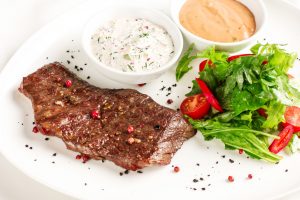
Recipe of the Week: Grilled Steak with Chimichurri Sauce

July 5, 2018

Grilling season is in full swing! This steak is grilled to perfection, topped with chimichurri sauce and served with a side of tomatoes and green beans. Perfect to whip up for the whole family.
Total: 30 min
Cook Time: 15 min
Yield: 4 servings

Ingredients:

Chimichurri Sauce:

Directions:
  1. Place a double layered piece of heavy-duty foil on a tray or cutting board; fold and gather edge to form a rim. Toss the green beans and tomatoes on foil with 1 tablespoon olive oil; season with salt and pepper.
  2. Preheat a grill to medium. Lightly oil the grill grates and season the steak with salt and pepper. Slide the foil tray onto the grill; cook, tossing occasionally, until the beans char slightly and cook through, about 15 minutes.
  3. Meanwhile, add the steaks to the grill; cook until desired doneness, about 5 minutes per side for medium-rare. Remove steaks to cutting board to rest 5 minutes. Slice, and serve steak and the vegetables with the Chimichurri Sauce.

For the Chimichurri Sauce:

  1. Combine the garlic, vinegar, herbs, olive oil and water in small food processor; pulse until herbs are coarsely chopped. Season with salt and pepper.

Nutrition Information Per Serving:

Calories: 451
Fat: 29 grams
Carbohydrates: 9 grams
Protein: 37 grams


Original recipe from the Food Network can be found here!

Filed Under: News, Recipes Tagged With: Diet, Exercise, Fitness, goals, health, healthy, members, motivation, Nutrition, physiologists, recipe, salad, success, summer, tips, vegetables, weight loss, Workout

Exercising with Rheumatoid Arthritis

July 5, 2018

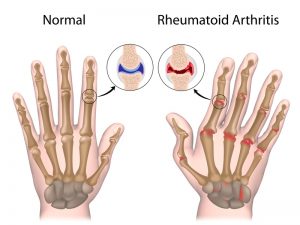
Rheumatoid Arthritis (RA) is a chronic inflammatory, autoimmune disorder that most commonly affects your joints. Based on recent data around 1.3 million adults across the United States suffer from RA. Along with prescription medications and therapy, properly prescribed exercise can also alleviate symptoms of RA and improve quality of life for those suffering with the disease.

A major symptom of RA is pain in joints, along with stiffness and loss of mobility. Developing a stretching routine can greatly improve mobility in affected and unaffected joints, decrease join stiffness, and could lead to less pain with certain movements. Doctors have recommended yoga and/or Tai Chi classes to help patients improve joint range of motion and to decrease stress.

Low-impact aerobic exercises are great for improving heart health and cardiovascular endurance while avoiding placing too much stress on your joints. Low impact dance classes, walking, or stationary bikes are some examples of aerobic exercises that are joint friendly. Swimming is also a phenomenal way to build endurance and strengthen muscle with almost no stress on joints.

It is also very important to include resistance training in your exercise programs. The goal being to relieve stress in affected joints by strengthening the muscles around them. Resistance bands, machines, free weights and body weight exercise can all be used/performed to achieve strength and mobility goals. Free weights may be better than some machines since they allow you to move in your body’s natural path of motion and do not force your joint into specific movement patterns. A physical therapist or exercise physiologist with proper experience can give guidance for appropriate exercise selection.

Final tips:

  • Don’t forget to stretch and strengthen smaller joints/muscles such as your ankles, wrists, and fingers.
  • Wear appropriate work out attire (for example proper footwear and insoles to avoid any slips or falls and to promote optimal joint alignment and stability).
  • Listen to your body! Learn the difference between soreness and pain and avoid anything that causes the latter.


By David McCalla, CSCS


“Best Exercises for Rheumatoid Arthritis.” Www.arthritis.org, www.arthritis.org/about-arthritis/types/rheumatoid-arthritis/articles/best-exercises-for-ra-2.php.

Filed Under: News Tagged With: Diet, Exercise, Fitness, goals, health, healthy, holiday, motivation, Nutrition, physiologists, Sports, sports performance, strength training, success, tips, weight loss, Workout

Recipe of the Week: Summer Kale Salad

June 27, 2018

Prep Time: 15 minutes
Marinate Time: 6 hours
Servings: 5

One of my favorite salads I have made in a very long time. Quick and easy to make with little clean up is a big win in my kitchen. Substitute out as you prefer- the options are endless with this salad. I would suggest adding a lean protein source like beans, avocado, or even chicken!

Ingredients:

  • 5-6 cups of kale (I used one big bag of kale from Trader Joes)
  • ½ cup dried unsweetened cranberries
  • ½ cup pine nuts
  • ½ cup diced red onions
  • ½ cup cherry red tomatoes
  • 1/3 cup feta cheese
  • Juice of one lemon
  • 2 fresh cloves of garlic, diced
  • ¼ cup olive oil
  • ½ cup balsamic vinegar
  • ½ tsp sea salt
  • ½ tsp black pepper

Directions:

  1. Mix kale, cranberries, tomatoes, nuts, and onions in a glass bowl.
  2. In a separate dish, mix lemon juice, olive oil, vinegar, salt, pepper, garlic to make a dressing.
  3. Pour dressing over kale and toss to coat evenly.
  4. Refrigerate for at least 4 hours, overnight is best. Before serving, toss in feta cheese.

Nutrition:
Calories: 243
Carbohydrates: 24g
Protein: 4g
Fat: 16g

Filed Under: News, Recipes Tagged With: Diet, Exercise, Fitness, goals, healthy, kale, Nutrition, recipe, salad, spinach, success, summer, weight loss, Workout

Returning to Exercise After a Heart Attack

June 26, 2018

Myocardial infarctions, better known as heart attacks, are one of the leading causes of death in the United States. Generally, heart attacks are a result of coronary heart disease (CHD). With CHD, plaque begins to buildup in the coronary arteries leading to a reduction of oxygen-rich blood to our heart. If the plaque builds up too largely and the heart does not receive enough blood, the heart muscles start to die. At this point, heart damage is not obvious and severe or long-lasting complications can occur, including a heart attack.

Symptoms are not always present in CHD and but there are a few major symptoms associated with a heart attack. These include chest pain, upper body pain above the belly button and shortness of breath. Thankfully, heart attacks and CHD are preventable and many risk factors can be controlled. The risk factors include:

  • Smoking
  • High blood pressure
  • High blood cholesterol
  • Obesity/Overweight
  • Lack of physical activity
  • Unhealthy diet
  • High blood sugar due to insulin resistance or diabetes

*Items in BOLD can be further controlled by increased physical activity

In the event that someone has experienced a heart attack, it is possible to return to normal activity. Most people that do not experience chest pain or discomfort or other problems will typically return to normal activities within a few weeks and walking can start immediately.

When programming for an individual that has had a heart attack it is important for them to ease back into exercise. The key is to slowly build up to being able to withstand 30 minutes of moderate intensity activity. During this period, low-impact movements like walking or light gardening are preferred. As the individual gets stronger and gains stamina, others activities like swimming, cycling or non-contact sports can be added.

Strength training is not recommended in the short-term and, apart from light weights during the early recovery period should be avoided until a physician or cardiac rehabilitation team confirms approval to begin. This is due to the spike in blood pressure that is associated with heavy lifting.

If you would like information pertaining to CHD or myocardial infarctions be sure to check out my.clevelandclinic.org. Also, be aware that most patients will receive a prescription for cardiac rehabilitation, which has been an effective program for recovery post-myocardial infarction. Feel free to ask any of our fitness professionals any questions you may have.


By Julian C. Lee

Filed Under: News Tagged With: Diet, Exercise, Fitness, goals, healthy, heart, heart health, motivation, Nutrition, physiologists, running, strength training, success, tips, warmup, weight loss, Workout

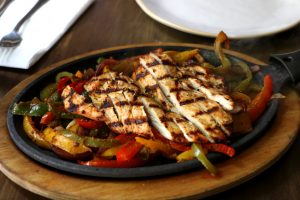
Recipe of the Week: Sheet Pan Chicken Fajitas

June 21, 2018

All you need is one sheet pan lined with tin foil! Pop it in the oven to get nice and hot so when the sliced peppers, onions, and chicken are placed on it, they start to sizzle. The preheated pan speed up the cooking time, which means dinner is ready to go in only 30 minutes!

Prep Time: 10 min
Cook Time: 20 min
Total Time: 30 min

Ingredients

  • 1 pound boneless skinless chicken breasts
  • 2 tablespoons olive oil, divided
  • 1 tablespoon chili powder
  • 1/2 tablespoon garlic powder
  • 1/2 tablespoon onion powder
  • 1 teaspoon paprika
  • 1 teaspoon cumin
  • 1 teaspoon dried oregano
  • 1/2 teaspoon salt
  • 1/2 black pepper
  • 3 bell peppers (any combination of colors), cut into strips
  • 1 small yellow onion, sliced
  • 8 small flour tortillas

Instructions

  1. Preheat oven to 425 degrees. Line a large baking sheet with tin foil and place it in the oven while you prep the vegetables and chicken.
  2. Pound the chicken breasts with a meat mallet until they are of even thickness. Coat the chicken with 1 tablespoon of olive oil. Mix the spices together in a small bowl and then sprinkle over the chicken in an even layer (both sides). Slice the chicken into long strips, about 1 – 1/2 inches wide.
  3. Toss the bell pepper slices and onions with the other tablespoon of olive oil. Remove the hot sheet pan from the oven and spread the peppers and onions in an even layer. Place the chicken strips among the vegetables. Cook for 20-25 minutes, or until the chicken is cooked through.
  4. Serve with warm tortillas, fresh guacamole, or salsa on top and enjoy!
  5. Optional: Try swapping the tortillas for quinoa, brown rice, or mixed greens for a deconstructed fajita!


Original recipe from Amanda’s Cookin’ can be found here!

Filed Under: News, Recipes Tagged With: chicken, Diet, Exercise, Fitness, goals, health, healthy, motivation, Nutrition, recipe, running, salad, Sports, strength training, success, tips, vegetables, weight loss, Workout

Recipe of the Week: BALSAMIC CHICKEN AND ROASTED VEGETABLES

June 14, 2018

Prep Time: 15 minutes
Cook Time: 1 hour
Total Time: 1 hour 15 minutes
Servings: 6

Ingredients:

  • 6 chicken thighs skin on, bone in
  • 24 oz baby gold potatoes halved
  • 1 large red onion
  • 1 tbsp fresh rosemary chopped
  • 2 sprigs fresh thyme, remove the leaves
  • 1/2 tsp pepper
  • 1/2 tsp salt
  • 5 cup cherry tomatoes

Marinade

  • 3/4 cup balsamic vinegar
  • 2 tbsp olive oil
  • 1 clove garlic crushed
  • 2 tbsp dijon mustard

Instructions:

  1. Turn on your oven to 400° F
  2. Mix the marinade together and add the chicken, toss it around to coat it and put it in the fridge.
  3. Get out a half sheet pan. You can line it with parchment for easy clean up.
  4. Toss the halved potatoes and onions in a small amount of olive oil, and then place the potatoes only on the sheet pan and bake for 15 minutes. Put the onions to one side.
  5. After 15 minutes, remove the sheet pan and add the red onion and the chicken along with the marinade, then sprinkle on the chopped rosemary and thyme and a little salt and pepper, and put it back in the oven.
  6. Cook for a further 25 minutes, then take out the pan again to add the cherry tomatoes, and cook for 20 minutes more.
  7. After 45 minutes the chicken thighs should be fully cooked to an internal temperature of 165°F
  8. Plate and enjoy!

Note: You can use skinless boneless thighs, or skin on boneless variety too. The skinless boneless thighs will not take as long to cook as the bone in versions so you will need to adjust the cook time to compensate for that.

Nutrition:

Calories: 394 cal
Total Fat: 23g
Total Carbs: 22g
Sugars: 5g
Protein: 22g

Balsamic Chicken with Potatoes, Red Onion and Tomatoes

Filed Under: News, Recipes Tagged With: chicken, Diet, Exercise, Fitness, fruit, goals, health, healthy, Hydration, motivation, recipe, salad, sports performance, success, summer, tips, vegetables, weight loss, Workout

  • « Go to Previous Page
  • Page 1
  • Interim pages omitted …
  • Page 40
  • Page 41
  • Page 42
  • Page 43
  • Page 44
  • Interim pages omitted …
  • Page 61
  • Go to Next Page »

Primary Sidebar

Recent Posts

  • RECIPE OF THE WEEK: BEST MAPLE BACON BRUSSELS SPROUTS
  • RECIPE OF THE WEEK: HALLOWEEN BEAN DIP
  • RECIPE OF THE WEEK: FIRECRACKER GROUND BISON MEAL PREP BOWLS
  • RECIPE OF THE WEEK: HEALTHY HALLOWEEN STUFFED PEPPERS JACK-O-LANTERS
  • RECIPE OF THE WEEK: SALMON AND SWISS CHARD

Categories

  • News
  • Recipes

Get Started: (516) 548-7443 | fitness@peakptfitness.com

Footer

Peak Performance Fitness

  • Home
  • Why Peak Fitness
  • Programs
  • Free Trial
  • Contact
  • Blog
  • Gift Certificates
  • Physical Therapy Center

Our Programs

  • Weight Loss Program
  • Personal Training
  • Sports Specific Training
  • VO2 / RMR Analysis
  • Classes / TRX Training
  • ACL Rehabilitation Program
  • Insurance Reimbursement

225 Merrick Road
Lynbrook, NY 11563
USA

T +1 (516) 548-7443
T +1 (516) 599-8734
F +1 (516) 887-0803
E fitness@peakptfitness.com

Mailing List Signup

Join our mailing list to stay up to date on the latest news, events and exclusive offers!

Join Us Online

  • Facebook
  • Instagram
  • Twitter

Peak Performance Fitness | Visit the Peak Physical Therapy Center
Lynbrook: 225 Merrick Road, Lynbrook, NY 11563
Copyright © 2026 Peak Performance Fitness