• Skip to main content
  • Skip to primary sidebar
  • Skip to footer
Peak Performance Fitness

Lynbrook | New Hyde Park | NY

  • Home
  • Why Peak Fitness
    • About Us
    • Meet Our Team
    • Our Facilities
    • Testimonials
  • Our Programs
    • Weight Loss Program
    • Personal Training
    • Sports Specific Training
    • VO2 / RMR Analysis
    • InBody Body Composition Analysis
    • ACL Rehabilitation
    • Classes / TRX Training
    • Insurance Reimbursement
  • Free Trial
  • Contact
  • Blog
  • Gift Certificates
  • Physical Therapy Center
  • Home
  • Why Peak Fitness
    • About Us
    • Meet Our Team
    • Our Facilities
    • Testimonials
  • Our Programs
    • Weight Loss Program
    • Personal Training
    • Sports Specific Training
    • VO2 / RMR Analysis
    • InBody Body Composition Analysis
    • ACL Rehabilitation
    • Classes / TRX Training
    • Insurance Reimbursement
  • Free Trial
  • Contact
  • Blog
  • Gift Certificates
  • Physical Therapy Center

Workout

ACL Injury Prevention in Young Athletes

July 18, 2018

Knee injuries are common among athletes of all ages. Mostly common are tears or sprains of the the anterior cruciate ligament, or ACL. This small but powerful ligament works with the posterior cruciate ligament (PCL) to allow the knee to bend back and forth. It also helps to prevent the tibia from sliding out in front of the femur. The ACL also works to keep the knee stable during rotational movements.?

Athletes who play high-demand sports such as football, soccer, and basketball are most at risk of tearing an ACL. There is a risk of both contact and non-contact injury while playing sports. Even still, a majority of ACL injuries are non-contact. Female athletes are at an even greater risk of tearing their ACL. There are several factors that put females at a higher risk, including: overall strength (specific to the hip joint & lower extremity muscles), high Q angle (angle from the knee to the hip), and an inward collapse of the knee upon landing (valgus). Two of these factors can be modified with proper strength training to reduce the risk of injury. More often than not, however, athletes are focused on skills for their sport rather than strengthening. This is the greatest risk of all because weak athletes get injured.

Implementing a program comprised of both strength exercises and jumping/ plyometric movements with younger athletes is key to help reduce the risk of injury. These types of programs are more often done at the collegiate level, however, youth and high school athletes should implement strengthening in addition to skill work.  Exercises, such as the ones below, should be performed regularly, and executing them with proper form is vital. Warming up is essential to prime the muscles and the joint for movement. As the athlete builds strength in both bi-lateral and uni-lateral movements, they can then progress to performing plyometric movements. These exercises focus on developing power and proper landing form. The best injury prevention is prehabilitation- strengthening before an injury occurs to ultimately decrease the athlete’s risk on the field.

The following are some examples of warm-up, strength, and plyometric exercises that could be used in an ACL prehab or rehabilitation program.

Warm-Up

  • Jog forward
  • Backwards fire up hip extensors and hamstrings
  • Side to side shuffle- engage inner and outer thigh muscles and hips

Strengthening

  • Squats (advance to Goblet squat)
  • Single Leg RDL (increase SL Stability & strength the posterior chain)
  • Split Squats
  • Planks (focus on core & glute strength)

Plyometrics

  • Jump/ Landing Technique
  • Drop Jumps
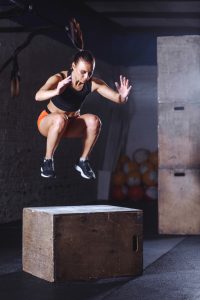
  • Box Jumps
  • Bounding (Forward/ Lateral)


By Louise Mills-Strasser, MS


Filed Under: News Tagged With: Acl, Athlete, Athletic Training, Diet, Exercise, Fitness, health, healthy, physiologists, prehabilitation, Rehabilitation, running, Sports, sports performance, sprinting, strength training, stretching, success, tips, Workout

Recipe of the Week: Jerk Chicken Collard Wrap

July 11, 2018

Total: 40 min
Yield: 4 servings (2 wraps per person)

Ingredients:

  • 8 large collard green leaves (about 10 ounces)
  • Kosher salt
  • 1/4 cup unsweetened coconut flakes
  • 1 pound chicken, sliced into 8 tenders
  • 2 tablespoons jerk seasoning
  • 1/3 cup nonfat Greek yogurt
  • 14.5-ounce can black beans, drained and rinsed
  • 2 cups shredded red cabbage (from 1/2 small head)
  • 2 tablespoons lime juice
  • 1 small avocado, sliced
  • 1 small red bell pepper, cut into thin strips

Directions:

  1. Remove the stems up to the leafy part of the collards. Lay each collard leaf underside up on a flat surface. Locate the thickest part of the stem and use a vegetable peeler to shave off the top for even thickness (this makes it easier to roll up the leaves).
  2. Fill a large wide skillet or pan with just enough water to coat the bottom. Arrange a few leaves at a time in a circle, overlapping, in the bottom of the skillet and sprinkle lightly with salt. Repeat with the remaining leaves. Put the skillet over medium-high heat and as soon as steam appears, lower the heat to medium, cover and steam until the collards are green, tender and pliable, 5 to 6 minutes. Use tongs to transfer the leaves to a baking sheet to cool completely.
  3. Meanwhile, arrange a rack in the top of the oven and preheat the broiler. Scatter the coconut on a baking sheet and broil until toasted, 15 to 30 seconds. Transfer to a medium bowl. Coat the chicken in 1 tablespoon of the jerk seasoning and 1 tablespoon of the yogurt. Arrange the chicken tenders on the baking sheet and broil until lightly browned and cooked through.
  4. Add the beans to the bowl with the coconut and use a fork to mash lightly. Combine the cabbage, lime juice and remaining 1/4 cup yogurt and 1 tablespoon jerk seasoning in a separate bowl.
  5. Lay a collard leaf underside up on a work surface. Lay a piece of chicken across the middle. Top the chicken with a couple slices of avocado and strips of pepper. Pile an eighth of the coconut black beans next to the chicken. Pile an eighth of the cabbage mixture next to the beans. Fold in the sides of the collard leaf and roll up like a burrito. Repeat with the remaining leaves and filling ingredients.


Original recipe from the Foot Network can be found here!

Filed Under: News, Recipes Tagged With: Exercise, Fitness, goals, health, healthy, motivation, Nutrition, recipe, salad, success, summer, weight loss, Workout

Recipe of the Week: Grilled Steak with Chimichurri Sauce

July 5, 2018

Grilling season is in full swing! This steak is grilled to perfection, topped with chimichurri sauce and served with a side of tomatoes and green beans. Perfect to whip up for the whole family.
Total: 30 min
Cook Time: 15 min
Yield: 4 servings

Ingredients:

Chimichurri Sauce:

Directions:
  1. Place a double layered piece of heavy-duty foil on a tray or cutting board; fold and gather edge to form a rim. Toss the green beans and tomatoes on foil with 1 tablespoon olive oil; season with salt and pepper.
  2. Preheat a grill to medium. Lightly oil the grill grates and season the steak with salt and pepper. Slide the foil tray onto the grill; cook, tossing occasionally, until the beans char slightly and cook through, about 15 minutes.
  3. Meanwhile, add the steaks to the grill; cook until desired doneness, about 5 minutes per side for medium-rare. Remove steaks to cutting board to rest 5 minutes. Slice, and serve steak and the vegetables with the Chimichurri Sauce.

For the Chimichurri Sauce:

  1. Combine the garlic, vinegar, herbs, olive oil and water in small food processor; pulse until herbs are coarsely chopped. Season with salt and pepper.

Nutrition Information Per Serving:

Calories: 451
Fat: 29 grams
Carbohydrates: 9 grams
Protein: 37 grams


Original recipe from the Food Network can be found here!

Filed Under: News, Recipes Tagged With: Diet, Exercise, Fitness, goals, health, healthy, members, motivation, Nutrition, physiologists, recipe, salad, success, summer, tips, vegetables, weight loss, Workout

Exercising with Rheumatoid Arthritis

July 5, 2018

Rheumatoid Arthritis (RA) is a chronic inflammatory, autoimmune disorder that most commonly affects your joints. Based on recent data around 1.3 million adults across the United States suffer from RA. Along with prescription medications and therapy, properly prescribed exercise can also alleviate symptoms of RA and improve quality of life for those suffering with the disease.

A major symptom of RA is pain in joints, along with stiffness and loss of mobility. Developing a stretching routine can greatly improve mobility in affected and unaffected joints, decrease join stiffness, and could lead to less pain with certain movements. Doctors have recommended yoga and/or Tai Chi classes to help patients improve joint range of motion and to decrease stress.

Low-impact aerobic exercises are great for improving heart health and cardiovascular endurance while avoiding placing too much stress on your joints. Low impact dance classes, walking, or stationary bikes are some examples of aerobic exercises that are joint friendly. Swimming is also a phenomenal way to build endurance and strengthen muscle with almost no stress on joints.

It is also very important to include resistance training in your exercise programs. The goal being to relieve stress in affected joints by strengthening the muscles around them. Resistance bands, machines, free weights and body weight exercise can all be used/performed to achieve strength and mobility goals. Free weights may be better than some machines since they allow you to move in your body’s natural path of motion and do not force your joint into specific movement patterns. A physical therapist or exercise physiologist with proper experience can give guidance for appropriate exercise selection.

Final tips:

  • Don’t forget to stretch and strengthen smaller joints/muscles such as your ankles, wrists, and fingers.
  • Wear appropriate work out attire (for example proper footwear and insoles to avoid any slips or falls and to promote optimal joint alignment and stability).
  • Listen to your body! Learn the difference between soreness and pain and avoid anything that causes the latter.


By David McCalla, CSCS


“Best Exercises for Rheumatoid Arthritis.” Www.arthritis.org, www.arthritis.org/about-arthritis/types/rheumatoid-arthritis/articles/best-exercises-for-ra-2.php.

Filed Under: News Tagged With: Diet, Exercise, Fitness, goals, health, healthy, holiday, motivation, Nutrition, physiologists, Sports, sports performance, strength training, success, tips, weight loss, Workout

Recipe of the Week: Summer Kale Salad

June 27, 2018

Prep Time: 15 minutes
Marinate Time: 6 hours
Servings: 5

One of my favorite salads I have made in a very long time. Quick and easy to make with little clean up is a big win in my kitchen. Substitute out as you prefer- the options are endless with this salad. I would suggest adding a lean protein source like beans, avocado, or even chicken!

Ingredients:

  • 5-6 cups of kale (I used one big bag of kale from Trader Joes)
  • ½ cup dried unsweetened cranberries
  • ½ cup pine nuts
  • ½ cup diced red onions
  • ½ cup cherry red tomatoes
  • 1/3 cup feta cheese
  • Juice of one lemon
  • 2 fresh cloves of garlic, diced
  • ¼ cup olive oil
  • ½ cup balsamic vinegar
  • ½ tsp sea salt
  • ½ tsp black pepper

Directions:

  1. Mix kale, cranberries, tomatoes, nuts, and onions in a glass bowl.
  2. In a separate dish, mix lemon juice, olive oil, vinegar, salt, pepper, garlic to make a dressing.
  3. Pour dressing over kale and toss to coat evenly.
  4. Refrigerate for at least 4 hours, overnight is best. Before serving, toss in feta cheese.

Nutrition:
Calories: 243
Carbohydrates: 24g
Protein: 4g
Fat: 16g

Filed Under: News, Recipes Tagged With: Diet, Exercise, Fitness, goals, healthy, kale, Nutrition, recipe, salad, spinach, success, summer, weight loss, Workout

Returning to Exercise After a Heart Attack

June 26, 2018

Myocardial infarctions, better known as heart attacks, are one of the leading causes of death in the United States. Generally, heart attacks are a result of coronary heart disease (CHD). With CHD, plaque begins to buildup in the coronary arteries leading to a reduction of oxygen-rich blood to our heart. If the plaque builds up too largely and the heart does not receive enough blood, the heart muscles start to die. At this point, heart damage is not obvious and severe or long-lasting complications can occur, including a heart attack.

Symptoms are not always present in CHD and but there are a few major symptoms associated with a heart attack. These include chest pain, upper body pain above the belly button and shortness of breath. Thankfully, heart attacks and CHD are preventable and many risk factors can be controlled. The risk factors include:

  • Smoking
  • High blood pressure
  • High blood cholesterol
  • Obesity/Overweight
  • Lack of physical activity
  • Unhealthy diet
  • High blood sugar due to insulin resistance or diabetes

*Items in BOLD can be further controlled by increased physical activity

In the event that someone has experienced a heart attack, it is possible to return to normal activity. Most people that do not experience chest pain or discomfort or other problems will typically return to normal activities within a few weeks and walking can start immediately.

When programming for an individual that has had a heart attack it is important for them to ease back into exercise. The key is to slowly build up to being able to withstand 30 minutes of moderate intensity activity. During this period, low-impact movements like walking or light gardening are preferred. As the individual gets stronger and gains stamina, others activities like swimming, cycling or non-contact sports can be added.

Strength training is not recommended in the short-term and, apart from light weights during the early recovery period should be avoided until a physician or cardiac rehabilitation team confirms approval to begin. This is due to the spike in blood pressure that is associated with heavy lifting.

If you would like information pertaining to CHD or myocardial infarctions be sure to check out my.clevelandclinic.org. Also, be aware that most patients will receive a prescription for cardiac rehabilitation, which has been an effective program for recovery post-myocardial infarction. Feel free to ask any of our fitness professionals any questions you may have.


By Julian C. Lee

Filed Under: News Tagged With: Diet, Exercise, Fitness, goals, healthy, heart, heart health, motivation, Nutrition, physiologists, running, strength training, success, tips, warmup, weight loss, Workout

Recipe of the Week: Sheet Pan Chicken Fajitas

June 21, 2018

All you need is one sheet pan lined with tin foil! Pop it in the oven to get nice and hot so when the sliced peppers, onions, and chicken are placed on it, they start to sizzle. The preheated pan speed up the cooking time, which means dinner is ready to go in only 30 minutes!

Prep Time: 10 min
Cook Time: 20 min
Total Time: 30 min

Ingredients

  • 1 pound boneless skinless chicken breasts
  • 2 tablespoons olive oil, divided
  • 1 tablespoon chili powder
  • 1/2 tablespoon garlic powder
  • 1/2 tablespoon onion powder
  • 1 teaspoon paprika
  • 1 teaspoon cumin
  • 1 teaspoon dried oregano
  • 1/2 teaspoon salt
  • 1/2 black pepper
  • 3 bell peppers (any combination of colors), cut into strips
  • 1 small yellow onion, sliced
  • 8 small flour tortillas

Instructions

  1. Preheat oven to 425 degrees. Line a large baking sheet with tin foil and place it in the oven while you prep the vegetables and chicken.
  2. Pound the chicken breasts with a meat mallet until they are of even thickness. Coat the chicken with 1 tablespoon of olive oil. Mix the spices together in a small bowl and then sprinkle over the chicken in an even layer (both sides). Slice the chicken into long strips, about 1 – 1/2 inches wide.
  3. Toss the bell pepper slices and onions with the other tablespoon of olive oil. Remove the hot sheet pan from the oven and spread the peppers and onions in an even layer. Place the chicken strips among the vegetables. Cook for 20-25 minutes, or until the chicken is cooked through.
  4. Serve with warm tortillas, fresh guacamole, or salsa on top and enjoy!
  5. Optional: Try swapping the tortillas for quinoa, brown rice, or mixed greens for a deconstructed fajita!


Original recipe from Amanda’s Cookin’ can be found here!

Filed Under: News, Recipes Tagged With: chicken, Diet, Exercise, Fitness, goals, health, healthy, motivation, Nutrition, recipe, running, salad, Sports, strength training, success, tips, vegetables, weight loss, Workout

Signs, Symptoms, and Exercise Considerations for Stroke Victims

June 19, 2018

Although exercise has many benefits, a high amount of stress on the body can trigger negative events that one should look out for.  It is of vital importance to understand the signs and symptoms of cardiac events, such as the occurrence of a stroke.  Strokes occur when a blood vessel that is connected to the brain becomes extremely blocked from plaque build-up, causing a lack of oxygenated, nutrient-filled blood being delivered to the brain.

Stroke is the fourth leading cause of death in America today and can also cause long term changes leading to disability or lack of mobility/neuro-motor functioning.  This type of cardiac event can happen at any age but generally affects those ages 55 and older, and as we age our risk of having a stroke become greater.  Of all populations men, African Americans, and people with diabetes or heart disease are at the highest risk.

Some of the warning signs of having a stroke include sudden weakness of the face, arms or legs (especially on one side), sudden confusion or inability to speak, lack of vision, dizziness or coordination problems, and a sudden, severe headache.  If you have any of these signs, stop exercise immediately and get to the hospital or call 9-1-1.

The major goal of exercise after a stroke should be to improve the overall quality of life for the victim.  In addition to improving measures of quality of life, other measures such as functional capacity and mobility (i.e. increasing gait velocity), neurological impairment, and motor function (i.e. lowering the energy cost of a hemiparetic gait), will also benefit from regular exercise. The three major rehabilitation goals for the stroke patient are preventing complications of prolonged inactivity, decreasing recurrent stroke and cardiovascular events, and increasing aerobic fitness.

Before beginning an exercise program, the two most important things to consider are if the benefit outweighs the risk, as well as, the severity of the stroke.  A stroke victim should be evaluated by a medical professional before initiating a program—performing strength and aerobic training can lead to serious musculoskeletal injury.

To prevent muscle deterioration from prolonged inactivity, performing exercises that mimic movements of everyday life activities (i.e. standing from a seated position, squatting down, walking, reaching overhead) should performed regularly.  Moreover, moving the entire body throughout its full range of motion should also be considered.  In terms of aerobic fitness, stroke patients have been shown to achieve significantly lower maximal workloads and heart rate and blood pressure responses than control subjects during progressive exercise testing to volitional fatigue.

Setting reasonable goals to return to pre-stroke fitness levels as opposed to above baseline levels should be aimed for.  Exercising will be significantly harder post-stroke, but is of vital importance for the individual in order to improve their quality of life.


By Anthony Locast


Sources
Gordon, Neil F., et al. “Physical Activity and Exercise Recommendations for Stroke Survivors.”Circulation, American Heart Association, Inc., 27 Apr. 2004, circ.ahajournals.org/content/109/16/2031.

Filed Under: News Tagged With: Diet, Exercise, Fitness, goals, health, healthy, physiologists, special populations, Spine, sports performance, strength training, stretching, success, tips, warmup, Workout

  • « Go to Previous Page
  • Page 1
  • Interim pages omitted …
  • Page 34
  • Page 35
  • Page 36
  • Page 37
  • Page 38
  • Interim pages omitted …
  • Page 50
  • Go to Next Page »

Primary Sidebar

Recent Posts

  • RECIPE OF THE WEEK: BAKED COD WITH CHORIZO & WHITE BEANS
  • RECIPE OF THE WEEK: THE ORIGINAL MARRY MY CHICKEN
  • RECIPE OF THE WEEK: HIGH PROTEIN PASTA
  • RECIPE OF THE WEEK: HEALTHY VEGETABLE SOUP
  • RECIPE OF THE WEEK: EASY BREAKFAST EGG MUFFINS

Categories

  • News
  • Recipes

Get Started: (516) 548-7443 | fitness@peakptfitness.com

Footer

Peak Performance Fitness

  • Home
  • Why Peak Fitness
  • Programs
  • Free Trial
  • Contact
  • Blog
  • Gift Certificates
  • Physical Therapy Center

Our Programs

  • Weight Loss Program
  • Personal Training
  • Sports Specific Training
  • VO2 / RMR Analysis
  • Classes / TRX Training
  • ACL Rehabilitation Program
  • Insurance Reimbursement

225 Merrick Road
Lynbrook, NY 11563
USA

T +1 (516) 548-7443
T +1 (516) 599-8734
F +1 (516) 887-0803
E fitness@peakptfitness.com

Mailing List Signup

Join our mailing list to stay up to date on the latest news, events and exclusive offers!

Join Us Online

  • Facebook
  • Instagram
  • Twitter

Peak Performance Fitness | Visit the Peak Physical Therapy Center
Lynbrook: 225 Merrick Road, Lynbrook, NY 11563
Copyright © 2026 Peak Performance Fitness